My photo
Redondo Beach, California, United States
A music appreciator and wannabe historian with a poet’s heart and a comedian’s side-eye.

Tuesday, June 24, 2025

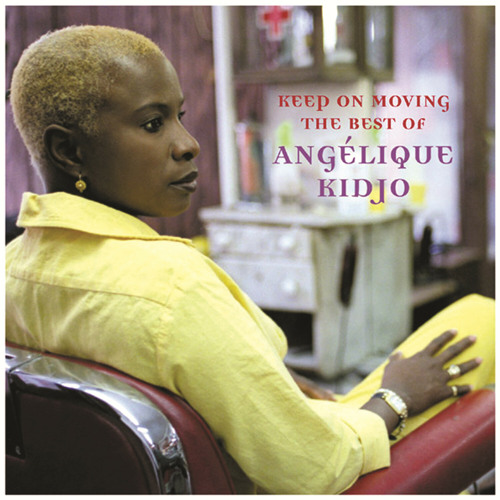
Angelique Kidjo: Summertime


Angelique Kidjo: Summertime

You know the Summertime is the right time.
Happy summer, human beans. This is your mental health check-in. How ya doin?

The “sun is shining and the weather is sweet” here in SoCal, where summer is our best outfit. I hope you’ve been digesting these blogs and staying tuned in wherever you are. And hey—if you ever have something you want me to hear, send it my way: berlysounds@gmail.com. My box is always open. I always need new sonic vitamins to chew.

The music I want to get into today is near and dear to my heart. A piece I’ve shown to friends, shared with family, and worn out on late-night walks. This one’s nostalgic. Like… deep core memory nostalgic.

Where do I even begin?

The year was 2001. I was seven, maybe eight. Running around my self-proclaimed godparents’ house—sugar-high and full of purpose. My family’s drinking wine and full-belly laughing, playing Cho Dai Di (a card game that got competitive), and us kids? We’re building Bionicle armies, stacking those giant cardboard bricks into fortresses, and getting bossed around by me as I direct our next living-room dance number. The goal: impress the grown-ups enough to earn a sleepover. The soundtrack? Golden. Eclectic. Burned into memory.

One album in particular played like incense in the background: Chill Out in Paris—a 2001 Buddha-Bar–style compilation curated by French-Vietnamese DJ David Visan. Think: fusion, trip-hop, jazz-house, some classical strings remixed into soft house heaven. Velvet couch music. Rooftop café at golden hour music.

I didn’t go looking for Angelique Kidjo.
She found me—buried in the middle of that lounge compilation. Her voice sliced through the haze.That whole project felt like a passport. Every track gliding into the next. Sophisticated but never stiff. It held you in its palm without squeezing. And then—Angelique.

Her “Summertime” drops in like someone cracked open a window. Not louder. Just deeper.
Not trying to chill you out—trying to wake something up.

I can’t sing enough praise over this mixed CD. Chill Out in Paris is one of those records that shaped my inner world without asking permission. And soon enough, I’ll break the whole thing down for you—song by song, artist by artist. Something I’ve been meaning to do for myself for years.

But today? We’re welcoming summer by getting into Angelique. The rest is yet to come.

Who is this goddess?

______________________________________________________________________________

The Voice That Cuts Through Silk

Angelique Kidjo wasn’t trying to reinterpret Summertime. She was claiming it—braiding it into something older, deeper, and rooted.

Born in Benin in 1960, Angelique grew up steeped in music—traditional West African rhythms, French pop, Yoruba chants, James Brown, Miriam Makeba. A kid with a cosmic mixtape before the world caught up. She was performing onstage at six, pushing boundaries by her teens, and crossing continents to chase sound.

She’s won five Grammys. Been named one of Time's most influential people alive. Collaborated with everyone from Alicia Keys to Philip Glass. But titles don’t capture it. Her voice does. However, I knew NONE of this growing up. I just dug the absolute vibe of it all.

Angelique sings like someone who remembers every version of herself—past, present, ancestral. She doesn’t just carry melody. She carries memory. And in her hands, Summertime becomes something else entirely.

The original Summertime—written by George Gershwin in 1934 for Porgy and Bess—was already soaked in irony: a white man’s attempt at a Black spiritual, set in a fictionalized version of the American South. It’s a beautiful song. It’s also… loaded. Angelique doesn’t erase that. She translates it.

She sings in Fon—her native language from Benin. And instead of lush orchestration or jazz combo, she builds it with layered percussion, vocal harmonies, space. No flash. No drama. Just pulse and breath and intention. You don’t listen to her version. You enter it. You become immersed in her world.  It’s not a lullaby. It’s a trance. Not an American dream. A West African remembering. And, not that this has anything to do with what we're chatting about, but she is an absolutely stunning woman.

So, the first time I heard this, honestly? I didn’t even fully know what I was hearing. But years passed—decades really—and I kept coming back, over and over again.

Here I am, 24 years later, still playing it on repeat.

Only now, there’s less childlike wonder and wide-eyed awe, and more of me furiously rocking out, singing along, swept away—both slowly and briskly—into summer's wind.

Listen to this:

From the very first breath, Angelique’s version feels like stepping into a sacred space.
There are birds and bugs humming back and forth between your ears, like nature’s own stereo.
And then suddenly—a single drumbeat.
Percussive whispers chime in.
So gentle, but insistent—like the slow heartbeat of the earth waking up.

Her voice weaves softly through layers of harmony and space, carrying both strength and tenderness. She doesn’t rush. She invites you to settle in. To lean into the silence between sounds.

As the song moves forward, the rhythm subtly shifts—there’s a pulse that feels like wind gathering momentum, lifting you up without ever pushing. You’re both grounded and weightless.

And then—halfway through—the main beat hits.
And you’re done. You’re not going anywhere.
You’re completely sucked in, like a fly to a midnight porch light.

Throughout, Angelique’s lyrics wrap around the original melody, layering history and heritage over the familiar tune. It’s a reclamation and a transformation—a bridge between worlds.

_______________________________________________________________________________

Angélique reminded us that this song was never just a lullaby—it’s a memory dressed as a melody.

Her version doesn’t just reinterpret it; it reshapes the whole feeling. The production is one of a kind. I swear I can feel the sticky heat on my neck, that been-in-the-sun-all-day kind of haze.

In my opinion? This version—her version—is the version.

I hope you’re having a beautiful summer so far, and that you enjoyed this week’s blog. Here in SoCal, the heat is just getting started, and we’ll be sweating through it well into October.

Wherever this season finds you—whether you’re poolside, stuck in traffic, or chasing the shade—I promise this track will take you somewhere else entirely. 

And hey, I can’t wait to revisit this version again when I wrap up my deep-dive into the Chill Out in Paris record. That one’s coming soon, and trust me—you’re gonna want to come along for that ride.

Stay tuned in, my friends. - Berly D

If you dug this post, feel free to tip the scribbler: Venmo https://venmo.com/u/berlyd

Listen to today's tune on YouTube here: https://youtu.be/RYk670bY2-s?si=RQD06_9dcU0BFtBM

Stream Summertime by Angelique Kidjo | Listen online for free on SoundCloud


Thursday, June 12, 2025

Tiago Tunes & Victor Ramon: Manduvi

What an incredible trip I’ve just been on.

No drugs. No planes, no trains. Just me, my headphones, and the winding path of choro—Brazil’s unsung spirit of sound.

I’ve loved Brazilian music for years—bossa nova, samba, the classics. That bittersweet sway of João Gilberto, the fire of Elza Soares. But choro? I didn’t know your game, you wild, shape-shifting, folk-jazz beast. You came out of nowhere like a clever old friend I never knew I had.

If you read my last blog, you know we’d just tumbled into the deep well of Kar Kar—Boubacar Traoré. (If not, go check that out. Worth the detour.)

I was building a playlist around Kar Kar’s lineage—West African blues, Sahel rhythms, desert ghosts—when suddenly a rogue track hijacked the queue. And boom.
Two words.
Holy. Crap.

It was like the sun, the soil, and the air all started singing at once. Like somebody turned a cobblestone alley into a jazz club in full daylight. Like I was being chased through Rio by a melody that knew my secrets. It felt like reading the heroic adventures of someone you wish you were, while their theme song played in real time.

Also? It somehow felt like a video game.
(It's giving Song of Storms (Zelda: Ocarina of Time) mixed with Corridors of Time (Chrono Trigger))

Cue the drum roll.
The song that cracked my skull open?
"Manduvi."
I’m telling you—if this blog ever becomes a docu-series, that’s the theme song. No question. I can already see the opening credits: me, suitcase in hand, dodging motorbikes in Marrakesh, sipping yerba mate in Buenos Aires, crying in a club in Naples. All of it, soundtracked by Manduvi—a melody so alive it feels like it’s walking beside you.

And the best part? It’s not just a single.
There’s a whole damn album.

Here’s the kicker: these guys have, like, 1,500 followers combined.
Now, I don’t care about clout metrics. Follower count has jack to do with how "good" music is. But come on. These folks are a revolution waiting to be noticed.
Mark my penny-worth words: they’re gonna blow.

There’s not much on these guys—not yet.  I had to dig. No big articles. No PR spin. Just fragments. A couple live videos, some Bandcamp liner notes, a handful of Portuguese interviews with the charm of auto-translated captions.

That’s half the joy though, isn’t it?
Falling down the rabbit hole. Piecing together the story from whispers and chords. It's almost like that's the whole point. But I could be wrong. how would I know, I'm just the writer. 

Let's talk about Choro first, then Tunes and Ramon.

_________________________________________________________________________________

Choro 

Brazil’s unsung hero—an old-school musical shape-shifter born in the late 19th century. It’s the sound of Rio’s cobblestone streets meeting the soul of European salon music and African rhythms.

Imagine a mix of mandolins, guitars, cavaquinhos (tiny stringed instruments), and flutes weaving melodies that can be both heartbreakingly nostalgic and wild with joy. It’s a conversation between instruments—a push and pull of syncopated rhythms and flowing counterpoint.

Choro isn’t just a genre—it’s a feeling, a lifestyle. It’s the soundtrack of Brazilian cafés, street corners, and roda sessions, where musicians gather in circles to trade riffs, stories, and history. Much like how jazz musicians "trade".

It’s the heartbeat behind samba and bossa nova, the foundation for so much Brazilian music you probably know but didn’t realize traces back to choro. Choro is Brazil’s original jam session. 

Alright, now that you know the heartbeat of choro and the magic of the roda, let me introduce you to the two players bringing this tradition into the now.

Tiago Tunes and Victor Ramon

Young masters rooted deep in Brazil’s choro circles, yet reaching for something fresh.

Tiago started young, picking up the bandolim in Brazil, chasing the ghosts of legends like Jacob do Bandolim (listen to "Lamentos" & "Murmurando") while carving out his own bright, precise voice. Victor grew up surrounded by the rhythms of São Paulo’s café rodas, teaching and playing with a warmth and discipline that makes every note count.

Their paths crossed at a São Paulo roda—where music isn’t just played, it’s shared—and the conversation that started there became the track “Manduvi.”

This isn’t just a duet—it’s a dialogue between two storytellers. The whole album is a journey. What a feeling! 

Side note, they have an incredible photographer @vanpapillo on Instagram. 

(pictured are Tiago Tunes (R) and Victor Ramon (L) via Instagram

________________________________________________

Manduvi

This track has an ethereal magic stitched into every note—or maybe it’s just that these two are killer players and their producer’s a straight-up wizard. Tiago’s bandolim darts like sunlight flickering through leaves, while Victor’s guitar grounds everything with warm, steady rhythms.

They play this song like an intimate conversation between old friends who’ve mapped every twist and turn of the road they’ve walked together.

There’s a timelessness here—rooted deep in tradition but pulsing with a fresh, almost secret intimacy, like a whispered confidence shared just between you and the music.

Then BAM—the percussive breakdown hits in the middle, where rhythm steps out front and center. The strings pull back just enough for your ears to throb raw and feel alive. It’s earthy, urgent, primal—a moment that drags you to the core of choro’s heartbeat before the melody crashes back in like a hurricane’s force. No, I’m not talking about an intimate escapade… it's just THAT good and I'm excited.

Oh, I should probably give you this: https://youtu.be/kUZc0pVuaV8?si=X5044Omg76VZob3M

Enjoy

________________________________________________________________________________

Tucanuçu 

I tried hunting down some reviews of Tucanuçu, but, spoiler: they’re mostly in Portuguese. So with a little help from Google Translate and my own creative spins, here’s a snippet from Correio Braziliense:

"Two instruments take center stage on the album—the 10-string mandolin, wielded by Tiago Tunes, and the 10-string guitar, handled by Victor Ramon. Backing them up is percussionist Mariano Toniatti from Brasília, whose rhythms pulse through every track. You’ll also hear other guitars weaving in, adding layers to the mix.

The album’s name nods to the toco toucan, Brazil’s most famous toucan species—a fitting symbol for a project that’s colorful, bold, and unmistakably Brazilian. According to the artists, Tucanuçu was born from “the need and desire to materialize the artists’ compositions.”

It’s a record that feels like a conversation between tradition and fresh expression, told through strings, rhythms, and a little bit of toucan spirit. There are some fantastic featured artists and unexpected surprises, but I’m not in the business of spoiling. Hell, I’m not in business at all—I’m basically a frog on a hot rock, having a schmag, basking in rays by the water, simply vibing with this album.

You can go listen to it yourself. 

________________________________________________________________________________

Toucan-Approved Thoughts

This is direct from their collaborated Instagram post. Well, translated first...


That was 11 weeks ago. How did I get so lucky? Sometimes the timing of the universe feels straight-up divine. 

It looks like Manduvi is making its rounds. Maybe it landed on a playlist, or snuck into some genre algorithm thingy—I don’t know how this stuff works, I just follow the sound.

Most of the other tracks on the album are sitting around a thousand plays, and Manduvi? As of today (6/12/25), it’s clocking in at 89K.

Now, I don’t give a flying frick about metrics. But they do help trace how music travels, how it catches on, how it breathes across borders.

And for the record—I use YouTube Music. Not that it matters (it does—I don’t have YouTube ads).

I haven't gone deep enough to find their TikTok's or anything, so here are their Instagram's:

 @tunes.tiago @victor8ramon

Pulling back the curtain again—just a little. Because I still believe there’s real magic out there. Music with soul and sweat and centuries tucked inside it. Stuff that catches you off guard, that stirs something ancient in your bones even if you don’t know the words.

You might not have found Tucanuçu or Manduvi on your own. But now you have. That’s the whole point of this thing: to share the wonders hiding just past the algorithm’s edge.

Go listen to Tucanuçu! Let it spin while you’re cooking, walking, laying in the grass doing nothing at all. Let it find you. Let it soundtrack your life. Thanks for reading, and for letting me bring you along into this little corner of the world.

From the edges of sound and story—stay curious, stay open, and stay tuned in. - Berly

If you dug this post, feel free to tip the scribbler: Venmo https://venmo.com/u/berlyd

Listen to today's tune here: Manduvi: https://www.youtube.com/watch?v=PniCelYa3c8

Tuesday, June 10, 2025

Boubacar Traoré: Duna Ma Yelema


Well, well, well, well, well. Look who decided to open the laptop.

No promises about consistency — we’ve all heard that one before — but I’m here now. And if I’ve learned anything, it’s that I always come back to this. Writing helps me sort the noise. And god knows, there’s been a lot of it lately.

So, a little catch-up before we get to the good stuff.

I moved. Not far, just a few miles across town, but enough to feel like a reset. First time living alone, and it’s... weirdly wonderful. The quiet creeps in sometimes, sure. But there’s something about having a space that’s fully yours: to cry in, sing in, pace in, not do the dishes in, that hits different.

I’ve flirted with the idea of leaving SoCal. But I’m still here. Maybe it’s the ocean. Maybe it’s the stubbornness. Maybe it’s just not time to go yet.

Music’s been calling again, louder this time. I’m back in the studio, back on stages, back in that sacred chaos of collaborating with people I love and trust. It’s been good. It’s been better than good — it’s felt like coming home to something I forgot I built.

Couple shows coming up if you’re in the area:

  • Sunshine Soul – Saturday 6/14 @ 9pm at The Slip in Lomita. Jams. Jelly Jar Jams.

  • Berly D and The Nightlights – Sunday 6/22 @ 2:30pm. Jazz combo. Smooth as hell. What?

Oh, and I finished a sketchbook. Which may not sound like much, but if you’ve ever committed to filling 60 blank pages without abandoning ship halfway through... you get it. Tour video incoming. Maybe. No promises.

Anyway, enough about me (for now). Let’s talk about a sound I stumbled into late one night and haven’t quite been able to shake. Boubacar Traoré — How did we scan to this station?

_________________________________________________________________

INTRO:

Lately, I’ve been toying with the idea of going back to school  —  specifically, to study music history. It’s a path that really excites me… but one I’ve gone back and forth on. School is expensive, and to be honest, my relationship with the education system has been a little complicated. I’ve also imagined other careers over the years — law, the judicial system, even a few left-field ideas that might surprise you. But I won’t go down the full career-spiral here — you just need a little context.

So — music history.
If I were to pursue it formally, it would likely mean attending different schools across countries, across the world; collecting degrees and experiences like little sonic passports, all in the name of becoming a truly well-rounded music historian. The more I learn, the more I get closer to understanding just how much music I don’t know — it’s humbling and kind of thrilling. 

At the heart of it, I think what I really want is to travel the world, not just listening to music, but immersing myself in its roots. I want to sit with it, study it, talk to the people who carry it in their bones. From street corners to symphony halls, dusty archives to downtown holes in the wall — I want to understand where all music comes from, what it means to the people who make it, and how it shapes the soul of a place. And then — I want to share it all. I want to educate the world about the joys, wonders, and richness of the music they might not even know they’re missing. Imagine a travel show, but for music: part documentary, part cultural deep-dive, part jam session. Maybe it’s a Netflix series. Maybe it’s a podcast, a book, a little corner of the internet that turns into something bigger.

Whatever form it takes, I just know this: people deserve to experience the full spectrum of sound this world has to offer. It’s not just about sound. It’s about story, tradition, identity. Music as language, as memory, as resistance and release.

In this age of streaming, the landscape of music has changed forever — in ways that are both complex and fascinating. What I really want to focus on is one beautiful outcome: accessibility.

_______________________________________________________________________________

Like so many people, I’ve been surrounded by music my whole life — it’s woven into the fabric of who I am. I’ve listened to what I feel is a lot of it, yet somehow there's always more. I remember when streaming first hit the scene with platforms like Pandora and YouTube. Sure, streaming has its drawbacks, but today, we’re focusing on the bright side.

We now have access to all the music in the world—or at least, nearly all of it. And yet, there’s still so much that slips through the cracks: songs lost to time, recordings that never happened, music that was never shared, or simply waiting to be discovered. It’s truly unfathomable.

I feel incredibly lucky to experience the music I do—it unfolds like a kaleidoscope, revealing new colors and sounds with every listen. And I can’t forget to give a shoutout to Instagram and TikTok for opening doors to both fresh tracks and “new-to-me” classics.

In fact, the music I want to dive into today came straight from Instagram — a perfect example of how discovery continues to surprise and delight. The music I want to share today and the start to my music blogging journey is: Malian blues aka Mandingo music, often described as African blues. Are you familiar? Oh my gosh, what an incredible journey this has been so far! I am completely obsessed.

I was scrolling on Instagram and a video of Boubacar Traoré popped up. I was immediately in a trance. It's the kind of music feels like warm dusk settling over a quiet landscape — the kind of sound that slows your heartbeat and invites you inward. It evokes a deep, reflective stillness, like you're watching something important pass by, but in slow motion. There's melancholy in it, yes, but also grace — a gentle acceptance of beauty, transience, and longing.

Boubacar Traoré's "Duna Ma Yelema" carries the weight of history and memory in each note — earthy, soulful, tender. It's like you're being sung to by someone who has lived a hundred lives. I am a huge fan of this sort of music in any genre! 

Here's the video I saw: 

https://www.instagram.com/reel/DJzUmPmpFij/?igsh=NTc4MTIwNjQ2YQ==

This discovery cracked open an entire world for me — not just Boubacar Traoré, but the rich, hypnotic soundscape of Malian blues and its deep cultural roots. Rather than take you on a full-blown dissertation of everything I’ve uncovered (tempting as that may be), I’ll spare you the scroll.

The guitar work is often repetitive in the best way—looping, hypnotic, almost like a chant. It’s less about chord changes and more about groove, about pulse. There's usually a call-and-response element, vocals that feel like stories passed down, or prayers hummed under the breath. You’ll hear traditional instruments too—like the ngoni (think: ancient banjo) and the calabash used for percussion. Together, they create this trance-like rhythm that just sits in your chest. I have found that much of my music taste the past 5-7 years has been music of other genres with similar qualities. I would love to get into that at another time. Maybe "Music I've been loving...for the last 5-7 years". 

________________________________________________

KAR KAR

There’s a kind of music that doesn’t ask for your attention—it just commands it by existing. Boubacar Traoré plays that kind of music.

The guitar stopped me. Add a seasoned voice, and more ache than most people let themselves admit to, and I was experiencing magic. It was like overhearing someone’s private prayer. And I wanted to know everything.

Boubacar Traoré—nicknamed “Kar Kar” from his soccer days—was one of Mali’s first post-independence stars. Think early 1960s: Mali had just broken free from French colonial rule, and here’s this young guy singing about hope and struggle with a guitar slung across his body like it was part of him. His songs became unofficial national anthems. But—here’s the kicker—there were no recordings. No royalties. No fame outside the borders. Just radio airplay and a country that held him close... and then, quietly, let him disappear.

Life dealt him a heavy hand. After his wife died, he vanished for a while—working odd jobs in France, far from the spotlight he never really got in the first place. But when he came back in the '90s, this time with actual recordings, the world finally got to hear what Mali had known all along.

His music is blues, but not the kind that leans on 12 bars. This is desert blues—fluid, fingerpicked, cyclical. Quite hypnotic. It pulls from the griot tradition  (a west African storyteller), from sorrow, from longing. It’s fully transparent and yet full of wonder and mystery. Stripped-down, every note feels carved from something wise and empathetic.

Boubacar Traoré was one of the first to play Mandingo-based music on electric guitar in Mali. He is over 80 years old. Let that sink in. He’s still out there. Still touring. Still picking that guitar like it owes him something. Still breaking hearts softly, one note at a time. It’s not just impressive—it’s holy. His music feels distilled, sharper somehow, like the water’s been boiled off and all that’s left is the truth. No tricks, no studio magic. Just lived experience translated into melody.

It’s a quiet kind of greatness, the kind that sneaks up on you. And honestly, in a world that loves to chew up artists young and discard them before they get wise, watching someone like Boubacar still doing it—still doing it well—feels like witnessing a miracle. Not the loud, firework kind. The kind you almost miss if you’re not paying attention. I often wonder what kind of audience he has here in the states, and wish to know others who are aware of his work. 

I guess that’s part of why I’m here. To pull back the curtain a bit. To remind folks there’s still real magic out there—music with soul, depth, and stories waiting to be heard. Music that nourishes in a way that goes beyond just sound. Stuff you might not have stumbled on yet, but when you do, it changes something inside you. That’s what I want—to help people fall in love with the new and the unexpected. To open the door to those wonders waiting just beyond the familiar.

Can’t wait to take this journey with you all. I’ve put together a playlist featuring Kar Kar and a few others—music to get you started, to get you feeling it. It'll be shared on my YouTube which I'll link...somewhere. Thanks for reading, and for letting me share a little piece of this world with you.

From the edges of sound and story, stay tuned in. -Berly

If you dug this post, feel free to tip the scribbler: Venmo https://venmo.com/u/berlyd

Listen to todays tune here: https://www.youtube.com/watch?v=r4-uq8cTF7o&list=RDr4-uq8cTF7o&start_radio=1

Duna Ma Yelema - song and lyrics by Boubacar Traoré, Ali Farka Touré |  Spotify