My photo
Redondo Beach, California, United States
Documenting my music discoveries and the tales attached

Wednesday, July 30, 2025

The Cramps: Smell of Female


Goooood eeeevening, you deliciously deranged audiophiles…
Broadcasting live from the coldest summer the crypt’s seen in decades — perfect weather to dust off something a little… unholy.

Tonight’s tale? Less bone‑chilling terror… more graveyard go‑go.
It all began — as these wicked wonders often do — with a weekend getaway… and a T‑shirt that practically bit me back.

So gather ‘round, my ghoulish gang. The city’s a jungle, and I’m a beat‑hungry beast howling at the moon for something new‑to‑me and delightfully depraved.

And yes, I know these intros are cheesier than a werewolf’s grin under a blood moon…
But hey — if you don’t dig it? That’s okay, sugar skull. You’re allowed to be dead wrong.

Now then…

HOW… DID WE GET HERE?! Introducing… the sleaze, the snarl, the psycho‑surf sultans themselves…THE CRAMPS! And hey — if the cheese makes you cringe, there’s the door. Fondue’s not for quitters.

How I Got Cramps in Pomona (and Loved It)

Often I get the itch to get the hell out of town — hit the road, spend a couple days existing elsewhere. Ignoring texts, phone calls, emails, and every other fabricated form of communication. Just chasing mountains, wide‑open spaces, and yeah, you guessed it: someone else’s thrift stores.

Thrifting used to be cheap and fun. Now it’s racks of Harley reprints, old jeans cut into shirts and labeled “vintage,” and band tees that were at Target seven years ago. Nothing but overpriced nostalgia with the tags still on.

But every once in a while — if you get far enough away from the coast — you still find a real gem.

Rolled through Ontario to hang with my pal Angel, who generously let me claim the passenger throne for the weekend. Ate their food, drank their water, crashed in their guest room, and didn’t touch the wheel once — mooching like a pro, and loving every minute of it.

We found ourselves in Pomona; A gritty, artsy pocket of SoCal — where faded murals meet hip new galleries, and old industrial buildings get a second life as music venues and coffee shops. It’s got raw, authentic energy: a blend of history and hustle. A vibe that lives in two truths — rough around the edges, and totally alive.

We found ourselves at La Bomba Vintage Clothing — put it this way: multiple $5 racks out front? Already a promising sign. Then out pops this absolute gem of a tee: LIVE!! SMELL OF FEMALE! THE CRAMPS!

My exact reaction? That is fucking awesome. Zero context, didn’t matter — I was sold.

Rest of the day, we’re wandering around town, half-yelling, half-laughing: “the smellllll of feeemaaleeee!!!” What can I say? We were truly out there, live, laugh, loving in our own beautifully unhinged way.

We got to talking with the owner for a minute — real salt‑of‑the‑earth vintage guy, the type who’s seen a thousand trends circle the drain and come back up for air. He tells us The Cramps were this unholy cocktail: part Elvis hip‑swivel, part punk snarl, all dripping in campy midnight‑movie spectacle. And that Smell of Female? Turns out it’s a live album — raw, sweaty, the real deal.

This wasn’t some mass‑printed tee from the endcap at Target. Nah. This was old‑school ink on cotton; the kind of shirt that’s survived more beer‑soaked pits and cigarette burns than most bands survive tours. 

Was I about to find out I was more of a "gorehound" than I’d ever suspected?


Confessions of a Goo Goo Muck

I left Ontario and headed west for the coast again. The long solo road trip is sacred. Since the 1930s, when somebody first bolted a radio into a car, we’ve had nearly a hundred years of this: singing at the steering wheel. In that time, more than a few tears have been shed, late‑night drive‑thru meals devoured, and private, seatbelt‑crumpling performances given to no one at all.

It’s a ritual as old as the open road itself: just you, your thoughts, and whatever song happens to crawl out of the speakers next.

As silly as I may be, I deeply value this experience. It’s different than being home alone — it’s a different kind of alone entirely. Somehow there are people all around you… and yet, also not. Especially at night. It becomes a private world all your own: nothing but you and the road spinning out beneath you, as you accelerate to the rhythm of your soul’s pain, triumph, and whatever else refuses to stay buried.

Certain songs hit different behind the wheel. Some make you wanna slide one hand onto the wheel and just cruise; others have you braking every few miles so you don’t catch a ticket. And then there are the songs that make you shimmy in your seat, stank face locked in, feeling gloriously deranged.

That, my friends, is exactly what happened when I hit shuffle on The Cramps and discovered, “Holy shit… I know this band!”
The song was Goo Goo Muck.

To me, this moment is somewhere near the epicenter of American culture: the surprise, the recognition, the private little thrill you get when a song crawls out of the speakers and taps something feral inside you. Many of you probably know this track already — it got famous again thanks to Wednesday, that spin‑off of the Addams Family.

Now, I hung out in the far corners of building 6 at my high school, where the theatre kids and punks cohabitated in glorious misfit solidarity. It’s been a long time since I’ve wandered back down that hallway… but damn, it feels stupidly good to be here again. 

The Cramps crawled out of New York City in the late ’70s, cooked up by Lux Interior (singer) and Poison Ivy (guitar)  — a couple both on stage and off. Their sound? A sweaty, slinky mess of rockabilly twang, B‑movie horror, garage punk snarl, and enough camp to fill a midnight double feature. Some people called it psychobilly; the band mostly called it fun.

They didn’t just play shows — they staged something closer to a haunted sock hop: reverb‑soaked guitars, hips shaking like a Go‑Go ghoul, and Lux howling into the mic like Elvis raised by wolves. It was trashy, theatrical, tongue‑in‑cheek, and somehow still dead serious about being unserious. And for the weird kids — the punks, the goths, the grease‑stained rockabilly crowd — The Cramps felt like home.

Now I had the history. I had the shirt. All that was left was to drop the needle on what might be one of the greatest album titles ever pressed: Smell of Female.


The Devil Gets Dizzy at the Stuff I Dig

Smell of Female isn’t just a live album. It’s a six‑track séance recorded at The Peppermint Lounge in NYC, 1983 — sweaty proof that The Cramps weren’t just playing music; they were raising something feral from the floorboards.

It’s messy, it’s raw, it’s gloriously unpolished. Lux howls and yelps like he’s half‑possessed, Poison Ivy’s guitar snakes and slashes through reverb‑soaked air, and the whole thing feels less like a concert and more like a B‑movie exorcism shot on grainy film.

Look: I’ve never been much of a horror buff. Slashers? No. Gore? Pass. But this? This I can get behind. This ex‑theatre kid lives for camp. It’s trashy, sexy, fun as hell — the kind of graveyard go‑go that makes you laugh and growl along.

Some personal standouts:
“I Ain’t Nuthin’ but a Gorehound” — pure Elvis hip‑shake, if he crawled out of a swamp wearing leopard print, black eyeliner, and a grin. Lux is basically Elvis and Ozzy in one.
“She Said” — the lyrics are basically Lux shouting WHO! HEY! HA! HA! at full throttle. You don’t even care what she said; you’re too busy thrashing along.
“Surfin’ Dead” — surf rock for the freshly resurrected, all wet reverb and tongue‑in‑cheek doom.

But it’s not just the songs — it’s the energy: the unfiltered proof that coolness isn’t about perfection. It’s about sweat, snarl, and swinging so hard the devil himself starts feeling woozy.

Smell of Female doesn’t ask you to listen politely; it dares you to bare your teeth, pop your collar, and dance with your shadows.

Some live albums scrub away the sweat. This one? It keeps the claw marks right where they landed. And thank the ghosts for that.

And let’s not forget: behind all that snarl and swagger was Poison Ivy — guitar slung low, deadpan stare, conjuring those swampy riffs that turned cheap amps into graveyard choirs. Proof that women in rock ’n’ roll don’t just keep pace; they drive the hearse.

So here’s to the swamp‑soaked riffs, the stank‑face road trips, and live albums that leave the claw marks right where they landed.
Here’s to Poison Ivy — a badass woman who rewrote the rules, owning every note with fierce coolness and proving that rock ‘n’ roll isn’t just a boys’ club.

And here’s to Ozzy Osbourne: the Prince of Darkness himself, buried today (7-30-25) but forever howling in our souls — reminding us that the wild spirit of rock never dies.

Stay Tuned in, my friends. -Berly D

If you dug this post, feel free to tip the scribbler: Venmo: https://venmo.com/u/berlyd

Listen to "Smell of Female" here: https://www.youtube.com/watch?v=V00BEZV3jqs
Listen to "Goo Goo Muck" here: https://youtu.be/RVhdHAqoE_c?si=jytViJQpSU0Wsq3D


Wednesday, July 23, 2025

Hannah Frances: Falling From and Further


Good day, audiophiles. I hope you’re finding the earth beautiful today, however it shows up for you. It’s another phenomenal day to be alive.
And as always: if you stumble on new—or new-to-you—music anywhere in the world, share it with me.

Today, of course, I’m bringing you another story of music discovery. A beautiful accident—though this time, it’s really two stories in one.

See, Falling From and Further is a new release by Hannah Frances. But Hannah herself? She isn’t new to me.
So how did I get here? How did this song land in my life?

Like most discoveries worth keeping, it started as a small moment: part intention, part accident, part quiet fate.


I LOVE YOU WASHINGTON STATE

In the chilly hours and minutes of an uncertain November in 2022, I sat staring blankly at the computer screen of my 8–5 at the time. Uninspired, bleak, and all too easily taking for granted the season-less nature of SoCal’s autumn.

I needed something. A place to run to. A song to sweep me off my feet—anything to free me from the rolling-chair rhythm and blues. It was a soulless place: “quiet zone” signs scattered through dusty halls, and you couldn’t even use the bathroom without someone watching the time.

I remember scanning the web for new job opportunities, new local spots to book the band… all while trying to hide the only unblocked music site on the company computer: Pandora. Among everything else, at least it was never silent—not in my headset, anyway.

What was I listening to? I’m glad you asked.

Damien Jurado is like the Pacific Northwest’s voice, carrying a reel-to-reel recorder, a worn notebook, and something that feels like a half-whispered prayer.

Seattle-born, he’s a singer-songwriter whose songs feel less like compositions and more like overheard confessions — dispatches from motel rooms, ghost towns, and rainy city corners.

As much as I want to make this a blog about Damien and Hannah, she deserves her own space—and I think he’d agree. So, I’ll skip the full Damien details for now. Just know: it’s vital to the timeline.


I’m listening to The Last Great Washington State, from Jurado’s album The Horizon Just Laughed. His voice slides gently into my ears:

“I love you, Washington State.”

And suddenly, I have an epiphany:
I gotta go to Seattle.

I’m clicking around to see where to stay, somewhere walkable—and I’m elated that I can catch my dream spots in a single day: KEXP and Sub Pop Records. The universe was sending me love that day, my friends.

Then I look at what shows are playing that weekend… and there it is; Damien Jurado: Live at St. Mark’s Cathedral. And who’s opening? Hannah Frances.


I could give you a minute-by-minute recap of the trip, but I’ll keep it short.
Here’s what you need to know:
– I went with my younger brother Jeremy, and we had an amazing time
– We stayed at the Mediterranean Inn, across the street from Dick’s Burgers, which we ate at 3 times.
– We rode Bird scooters and walked everywhere, it was ridiculously fun in the freezing cold.
– The trees were every shade you can imagine. I am so grateful for this Earth.
– It was the middle of November in Seattle—and we didn’t see a single drop of rain all weekend. No rain. In Seattle.

It was a magical two and a half days. I’d do it all over again.

We touched down in Seattle on Friday night, taxied to the hotel, dropped our bags, and rode straight up to St. Mark’s. We made it fifteen minutes before the show started. Serendipity.

Normally, before seeing a new-to-me artist, I’d do a little research—listening and more listening—but this time, I wanted to be surprised. I had no idea that a transcendent evening was waiting for me.


Hannah’s Haunted Cathedral

Hannah took the stage that evening with a friend on cello, while she sang and played guitar. And as I sit here now, trying to name what I felt, all I can really start with is this:

I wish you were there.

Her voice was made for a cathedral. The timbre of her vowels sifted through the old organ pipes and curled into the arches, ringing out the duality of living: pain and joy, gratitude and confusion, holding on and letting go.

Hannah is a profound feeler. Her lyrics carry the weight of spiritual work — the kind of poetry that comes from a place of deep self-reflection and healing. It’s the honest reckoning with joy and pain, light and shadow, all tangled up in the messy business of becoming your highest self. Writing from that place takes courage — a willingness to be vulnerable, to hold both hope and heartbreak in one hand, and still keep reaching for the truth.

From the moment I heard her at St. Mark’s, I knew I was witnessing something rare. She sang as though we could see her bones, as though the light and dark of her heart pulsed just beneath her skin.

And though I’m not sure I’m qualified to speak on her guitar playing, I’ll try: she’s a kind of wizard. A self-taught plunky-plunker and pitter-patter conjurer, playing like raindrops on a tin roof — steady, surprising, achingly alive.

I felt lucky — deeply, quietly lucky — to be there. And I think she felt it too, that something in the room was different that night. At least, I hope she did.

She looked as though her soul’s light was shining through every note — beaming, bending, dancing in the joy of what is so clearly her purpose: to heal the listener, even as she heals herself by singing.

It felt less like a show and more like a shared exhale — an unspoken agreement between artist and audience to let the tenderness be seen. I've seen her three times now, and each time it feels the same: a healing ritual disguised as a performance.

Since then, Hannah’s released more music, more videos, toured across the US and EU — doing the damn thing, and doing it with heart.

If you’ve never heard Hannah, I’d recommend… everything. But let’s start with the latest.

_________________________________________________________________________________

The Art of Falling Further

This song is so warm. Like sitting in the sun on a grassy hill, staring out at the ocean. Then the summer wind kicks up, whipping your hair into your eyes and mouth — but you can’t be bothered.
Who could look away?

Falling From and Further feels like that: a quiet warmth shot through with sudden gusts of memory, regret, tenderness. You don’t fight it; you let it pass over you. And when it does, you feel a little more alive, a little more honest, a little closer to whatever it is that matters most.

There are so many reasons to love Hannah’s music. We could spend the whole afternoon tracing the complex time signatures, the way the melodies twist and unfurl like smoke — and those are beautiful reasons, worthy ones.

But if I’m honest, what keeps me coming back are her words. The quiet power of the lyrics themselves, and the way her voice carries them: gentle, raw, almost hesitant at times, as though she’s letting us eavesdrop on something deeply private.

It’s that combination — the language and the living human breath behind it — that makes each song feel less like a performance and more like a conversation you’re lucky to overhear. Not to mention the inclusion of her band, which I have not seen live. What an incredible group. 

I trust these lyrics to speak for themselves. I don't want to psycho analyze every word simply because music carries the meaning of the listener, so I will just leave this here:

I lose track of thе life I've lived
Rеcalled through sudden losses
It's all there and gone the same
Lessons in forgetting
More than this, I wish for time back
More than this, I wish for time
More than this, I wish to
Feel it all

Hannah’s career is still taking shape, unfolding quietly and with intention. Each new song, each live show, is another step into a world she’s building for herself — one that invites listeners to slow down, lean in, and feel what so much of the world rushes past.

There’s something rare and beautiful in that kind of music: the kind that doesn’t need to shout to be heard, that trusts honesty and vulnerability to carry the weight.

I’m grateful to witness this moment — to watch an artist growing into her own voice, unfolding in real time. And I can’t wait to see where the music takes her next.

If you listen closely, you might find a little piece of yourself in the quiet spaces she leaves behind.

Thanks for sharing this discovery with me. Stay Tuned In, friends.  —Berly D

Watch the FALLING FROM AND FURTHER music video: https://www.youtube.com/watch?v=Ih52jKBpJsI

Hannah's Website: https://hannahfrancesmusic.com/

If you dug this post, feel free to tip the scribbler: Venmo https://venmo.com/u/berlyd

Bonus photos from the trip:


Wednesday, July 16, 2025

Yta Jourias & Bosq: Adomé Nyueto


Greetings, people of Earth. It is I, DJ Berly D. 

Hope you’re hungry, because ding ding—order up! A piping‑hot plate of fresh music discovery, served straight to the taste buds of your ear canals. Yes, everything I’m saying makes perfect sense.

Friends, go rummage in the closet and dust off those boogie shoes. It’s time to party. I want to say “this one’s a fun one,” but honestly? They’re all fun ones when the needle hits right.

Tell me—have you ever heard of Yta Jourias? No? How about Togo Soul 70? Or Bosq? Well, believe it or not, these all tie together in this slightly epic, slightly sweaty tale of: How DJ Berly D was knighted by the Queen herself as ‘Sir Crate‑Digger of SoCal.’

Thoroughly confused yet? Perfect. That means your ears are open.

Let’s get tuned in.

WDDJBDO (What Did DJ Berly D Do?)

You know, like most billionaires, I spend most of my nights bathing in gold — or, more accurately, bathing in the golden glow of a cracked computer screen and obscure disco edits.

One of those nights, I was deep diving into the rich rhythms of Gilberto Gil — the Brazilian legend whose music feels like sunlight and rain rolled into sound. I was jamming out to “Palco,” hit shuffle, and suddenly… Adome Nyueto popped up.

It wasn’t just a random track; it was a wild card, a ghost from Lomé that landed squarely in my headphones, pulling me into a story I hadn’t even known I was chasing.

The title read: “Adome Nyueto (Bosq Edit).” An eight‑minute track of, well… an absolute banger. I was movin’ and groovin’ in my seat before I even realized what hit me.

It kicks off with epic horn lines, some sultry sighs sprinkled in, and a beat that just won’t quit. About two minutes in, you realize the horns weren’t the main event — they were the invitation, winding us up for the vocal melody to drop. The percussion is smacking, the drums are pumping, and the voices tap in and out just enough to leave you wanting more.

The album cover reads Togo Soul 70. The artist? Yta Jourias. But to my surprise, when I clicked the artist’s name… nothing. No bio, no discography, no “listeners also like.” Just digital silence.

So what did this mean? Simple: it was time to deep dive.

I need you to know the can of worms I opened for myself the moment that track landed in my lap. So here’s what we needed to find out…

Who is Yta Jourias? What is Togo Soul 70? And what the hell is a Bosq Edit?

Crate‑Digger's 

Yta Jourias. A Togolese singer who lit up Lomé’s dance floors in the ’70s — her voice riding the line between command and longing, stitched together from funk, highlife, and raw West African soul.

No glossy box set, no tidy Wikipedia page. Just a handful of scattered tracks, half‑remembered stories from smoky clubs, and a groove stubborn enough to outlive the static.

Somewhere between dusty crates and humid back rooms in Lomé — the capital of Togo, a slim West African country wedged between Ghana and Benin on the Atlantic coast — a handful of reel‑to‑reel tapes survived. Ghosts of a decade when the city pulsed with its own brand of funk, soul, and sweat‑slicked disco.

Togo Soul 70 isn’t “to‑go” like take‑out. It’s Togo: the place, the soul, the sound. A compilation that’s part resurrection, part time capsule: two Parisian crate‑diggers — Julien Lebrun, a DJ and founder of Hot Casa Records, and Djamel Hammadi, a fellow producer and groove archaeologist — flew south chasing echoes.

They combed through radio station basements, flipped through warped reels, and tracked down aging bandleaders whose memories were the only surviving liner notes. All to save songs that risked slipping into silence forever.

What they unearthed is a map of Lomé’s nightlife in the 1970s: raw highlife horns, gospel‑soaked harmonies, basslines rough enough to light a cigarette on. Music that once roared out of smoky dance halls and roadside bars, born at the crossroads of tradition and post‑colonial possibility.

And in the middle of it all: “Adome Nyueto” by Yta Jourias — a groove so stubbornly alive that decades later, DJs like Bosq would loop it into something that still sways modern dance floors.

That’s what hooks me: the way music refuses to stay buried. How a few warped tapes, a stubborn love of rhythm, and a trip to Lomé can drag lost nights back into the light. Togo Soul 70 proves history doesn’t just gather dust on a shelf; sometimes it spins at 33 rpm, cracks and all, daring you not to dance..

BOSQ, BEATS & BELLS, OH MY!

History can’t stay locked in crates forever.  Boston‑bred producer and DJ, Bosq, has a crate‑digger’s ear and a dancer’s pulse. Where others might’ve filed Adome Nyueto away as a curious relic, Bosq caught something stubborn in Yta Jourias’s groove: something worth pulling back into the light. When the world needed disco extended mixes most - enter Bosq.

So he looped it, teased it, let the bassline breathe, and built a remix that doesn’t just pay homage — it resuscitates. Suddenly, a track recorded decades ago in Lomé is rattling modern dance floors from Brooklyn to Berlin. It’s not a museum piece anymore. It’s alive, sweating, swaying hips and spilling drinks.

All of that to say… here’s how the rabbit hole actually unraveled: first came the Bosq Edit — eight glorious minutes of looping horns, sweaty drums, and that stubborn groove that refused to quit. Then, after typing “Yta Jourias” into the void, the original track surfaced.

Same raw vibe, just shorter. The OG mix feels a little rougher around the edges; the percussion hits different, the drums crack in a way that sounds closer to the smoky dance halls it was born in. But both versions pulse with the same stubborn heartbeat that hooked me in the first place. 

Even with all this info, I should’ve known there’d still be something I’d miss. So I did what any self‑respecting billionaire does between golden bubble baths: I phoned a friend.

ET PHONE ANGEL

Enter Angel Lin — fellow music obsessive, LA‑renowned percussion wizard who creates their own instruments out of various recycled items and collected treasures, and one of my closest friends. I laid it all out for them: the late‑night rabbit hole, the dusty crates of Lomé, the stubborn heartbeat of Adome Nyueto.

That’s when Angel dropped a gem of their own: the Togo Bell — a small but mighty percussion instrument that clangs through the track like a heartbeat inside hammered bronze. I was lucky enough to get a pic. We live in the 21st century, our phones have cameras! “I found mine at a cool music store in Fullerton,” they said.

Naturally, we tried to track the place down… only to discover that Mo’s Fullerton Music had closed its doors after 70 years in business. We both sat there in sadness, and let out the only words that fit: “That hurts…” 

After letting the sting pass, I told Angel what made all this feel so special: the lost magic of the disco extended mix.

Picture it: you’re in a discotheque in the ’70s. The floor’s sticky, the mirror ball’s spinning, and your favorites are playing: “Ain’t No Stopping Us Now” by McFadden and Whitehead, “You Make Me Feel (Mighty Real)” by Sylvester, “Bad Girls” by Donna Summer. You know that feeling — when the groove’s so good you never want it to end.

That’s where the extended mix came in: ten glorious minutes of your favorite basslines and horn stabs, looping and layering to keep you movin’ and groovin’ until it’s way too late for anything good to be going down.

And that’s exactly what Bosq did with Adome Nyueto: stretched it out, let the bass breathe, kept the soul intact — honoring the original tune while giving it new legs to dance on.

You know what they say: everything comes back around eventually.

Can we expect more disco in the future — or some wild new shape of it? Will extended mixes survive in a world obsessed with 15‑second viral clips? And what about music shops, big and small — like Sam Ash and Mo’s Fullerton Music — will they stay afloat, or fade into memory?

I’m a firm believer that change is a good thing. But you can’t deny the value the past holds. It’s right there in Bosq’s edit: he could’ve made something entirely new — but instead, he looped the past back to life.

In the words of my favorite psychologist, Dr. Michael Yapko: “You are not defined by your unchangeable history.” And we aren’t.

But music? Maybe it is. Because it’s the hands, hearts, and grooves of the past that keep pushing the sound forward.

So, where are we going next?

Cheers to the future, friends. Time can only tell what we’ll hear next.

Stay tuned.

If you dug this post, feel free to tip the scribbler: Venmo https://venmo.com/u/berlyd


— Berly

Listen to the Bosq Edit here: https://www.youtube.com/watch?v=4CHIc_snlzY

Listen to the OG here: https://www.youtube.com/watch?v=W7fz2Cn-HPo

Find Angel Lin: https://angellin.bandcamp.com/


Monday, July 7, 2025

J.J. Cale: After Midnight

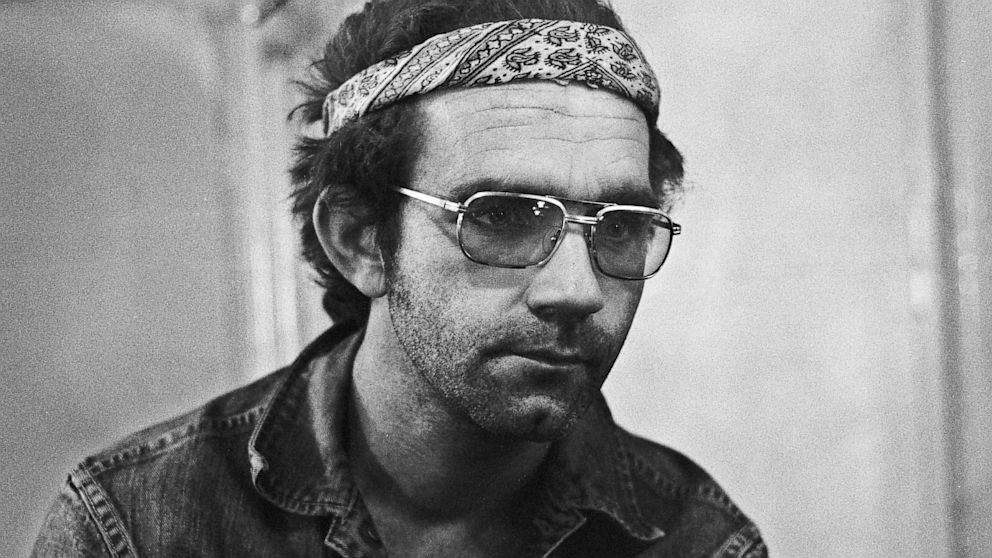
Grammy-Award Winning Musician JJ Cale Dies of a Heart Attack at 74 - ABC  News

Well howdy, all you music freaks!

How’s the summer heat treating you? Here in SoCal, it’s just starting to feel warm, and summer is right in our laps. I’m cruising on highs of 75 with an afternoon breeze—you know, they call me The Breeze.

If you know anything about J.J. Cale, he’s the breeze of the Tulsa Sound. But first, how the hell did I get here?

One hot summer night, I was digging through old funk and stumbled on “After Midnight” by Merl Saunders and Friends. The groove caught me—soft, bold, and tender. After playing it on repeat, I shared it with a close fellow music obsessor, Quin, and said, “This guy sounds just like Jerry Garcia.” He laughed and replied, “That’s because it is Jerry Garcia.”

Turns out Jerry's name was right there on the album cover. Classic me, not reading the fine print. Leave it to the writer to not read. I’m a big Dead fan by the way, but that’s a song for another broadcast.

Luckily for me, I got the dirty low down on J.J. Cale right then and there: the low-key songwriter behind those laid-back jams that influenced legends like Eric Clapton, Mark Knopfler, Neil Young, and more.

He also shared J.J. Cale Live: 2001—which kicks off with the crowd roaring for J.J., the energy alive and buzzing. That in-the-room-with-you feeling is one of my favorite parts of live music recordings.

Your Favorite Guitar Player's, Favorite Guitar Player

Born in Oklahoma City, raised in Tulsa, J.J. Cale avoided the spotlight. Sunglasses on, guitar in hand, he laid down smooth grooves that barely touched the ground.

Disc Live 2001 — JJ Cale

In the ’70s, he wrote “After Midnight” and “Cocaine”—made famous by Eric Clapton, who credits Cale for his whole solo career.

The Tulsa Sound? Bluesy, country-fried, sleepy but sharp—like a cold beer on the porch, after say... midnight...

J.J.’s influences ran deep — from the laid-back swing of jazz greats like Nat King Cole to the gritty blues of Lightnin’ Hopkins and the shuffling country rhythms of Bob Wills. He carved his own path, playing small clubs and dive bars rather than big arenas, letting his understated style work its magic in intimate rooms filled with true music lovers.

J.J. kept it humble—recording in home studios, mumbling vocals like whispered secrets, letting the groove do the talking. Oddly enough, I’d call him the “George Carlin of the blues”—raw, honest, unfiltered, and straight to the point. May they both rest in hell, “baking pies... without an oven.” (If you haven’t seen It’s Bad For Ya, go watch it. Okay, okay—get out of my head, this is a music blog, not a comedy special.)

Let It All Hang Out: After Midnight (Live 2001)

To be honest, I wasn’t sure whether to keep this section just about “After Midnight,” or talk about all the tracks I love from the live record. But hey—I’m doing all the work here. Go pick your own favorite songs!

No band. No frills. Just J.J. alone with his guitar, playing it like an afterthought and meaning every note more because of it. He half-mumbles the words, as if he’s telling them to the night air rather than an audience. And somehow, that makes you lean in closer. His seemingly carefully crafted range of dynamics is frankly... out of this damn world.

The groove isn’t held up by bass or drums — it’s hanging by his right hand alone, swaying like a porch swing that’s been there longer than you’ve been alive. There’s no urgency, no big solo waiting to save the day. It just is — stubbornly, beautifully.

Clapton polished it up and sold it to the world, but J.J. keeps it dirty. Small-room dirty. Barstool dirty. It sounds less like a hit single and more like something you’d mutter to yourself while lighting a cigarette at 2 a.m., contemplating your life's decisions. And seriously, I gotta know what he means when he says that after midnight he's gonna shake my tambourine.

No chorus of backing singers, no crash of cymbals — just a shrug into the dark by a voice that might as well be a guitar playing croaking toad that can carry a tune, and it is f**king great. I would highly recommend this a listen immediately. Turn off the lights, spark up a schmag, hit that repeat button, let the vibe take you away.

Anyway, that’s J.J. Cale — your favorite guitar player’s favorite guitar player. The guy who kept it small, raw, and unbothered by the spotlight, yet somehow made it sound bigger than anything on the radio.

He gave us more than just “After Midnight.” Think “Call Me the Breeze,” “Cocaine,” and a catalog of tunes that quietly shaped rock and blues without ever shouting for credit.

The Tulsa Sound doesn’t demand your attention. It sneaks in slow, like a warm breeze through an open window on a quiet night. You might not even notice it at first — but stick around, and you’ll wonder how you ever lived without it.

Go listen. Let it find you. From all of...just me, Stay Tuned Audiophiles! -DJ BerlyD

If you dug this post, feel free to tip the scribbler: Venmo https://venmo.com/u/berlyd

Listen to "After Midnight: Live 2001" here: https://www.youtube.com/watch?v=XKKqzmeYonE